
Before I get attacked for the title of the post, let me preface this piece by saying… Yes – I am aware we only visited a single region of Tanzania – not the entire country. I do not intend to generalize that my small experience is what the whole country is like. It should go without saying that I know everyone has different experiences based on where they might have spent time. For example, I am sure Katie’s time in Zanzibar celebrating her graduation from liberal arts college, sunbathing and swimming with whale sharks was #magical, #wanderlust, #beachhairdontcare – while my time sleeping in tents, pooping in a hole, and being stalked by dangerous predators was a bit different.
The purpose of this piece is to give you a general idea about the Kilimanjaro region of Tanzania based on our experience visiting last fall. There are a bunch of specific adventures we did, like climbing Kilimanjaro and a few days on safari, which I am going to document on their own in the near future when time allows. Hopefully your excitement waiting for those posts doesn’t keep you up at night.
If you are too lazy to read the whole bit here is my 5 point list summarizing:
- It was a pain to get to Tanzania with 30 total hours of travel time.
- The region is generally very poor.
- The people are absolutely incredible, especially the children.
- Kilimanjaro is the center of everything – literally and figuratively.
- Make sure you select quality travel companies, not people that just want your money.

“Africa?! What hell for?!”
That was the question pretty much everyone asked after we told them we were headed across the world the Tanzania. So how did we end up there? After coming home from Peru in late 2017, we were immediately on the hunt for our next “last big trip”. Peru was a really special experience and I personally loved the high altitude hiking. It is a perfect mix between beauty, adventure, and physical challenge (I miss Double Dare). Keeping that in mind, we narrowed our choices down to Everest Base Camp in Nepal or Kilimanjaro in Tanzania. Both offered culture, beauty, high altitude trekking and adventure. However, at the end of the day, there was really no shot in hell I could fly into Lukla (google Lukla airport videos) without being completely tranquilized. And I am not talking about a Xanax or two – I really mean like a fired dart direct to the jugular, putting down a wild beast tranquilized. With all that said, and the fact that my wife’s tranquilizer firearms certification had recently lapsed (that’s a joke), we selected Kilimanjaro.
OK – I am not being entirely fair. Kilimanjaro also offered a ton more than EBC in that we could add a safari and cultural tours to the trip after the climb. That was a huge determining factor considering we had never been to Africa nor had we ever done a real safari. I say “real” because I once drove my car through a “safari” at Six Flags Great Adventure in Jackson, New Jersey. When a monkey gives you the finger while simultaneously trying to rip your windshield wipers off, it just kind of lacks authenticity.

Getting There
Getting to Tanzania from the United States was kind of a difficult process. Up until this past October (2018) there were almost no direct flights from the States to anywhere in the realm of Tanzania. Kenya Air now offers a daily direct flight from New York (JFK) to Nairobi. From Nairobi you can take a quick 1 hour flight into Kilimanjaro, or even drive. We were not lucky with our flight selections and ended up with an exhausting journey from JFK to Frankfurt to Nairobi to Kilimanjaro. Total travel time door to door was something like 30 hours. Brutal!
For reference there are some direct flights to Kilimanjaro from major European and Middle Eastern cities offered by Turkish, Emirates (as FlyDubai), Qatar, KLM, and Condor. Those flights are from Istanbul, Dubai, Doha, Amsterdam, and Frankfurt respectively. Keep in mind though, on the Condor flight you are required to pedal very fast during takeoff, which can be exhausting.
The Kilimanjaro/Meru Region
As mentioned like 3 times already, eventually I will put together a piece dedicated to the trek up Kilimanjaro. There are a TON of things I wish I knew before heading out that I want to share with other hopeful climbers. Like how F’ing cold it gets! For now, the focus is on region and people.
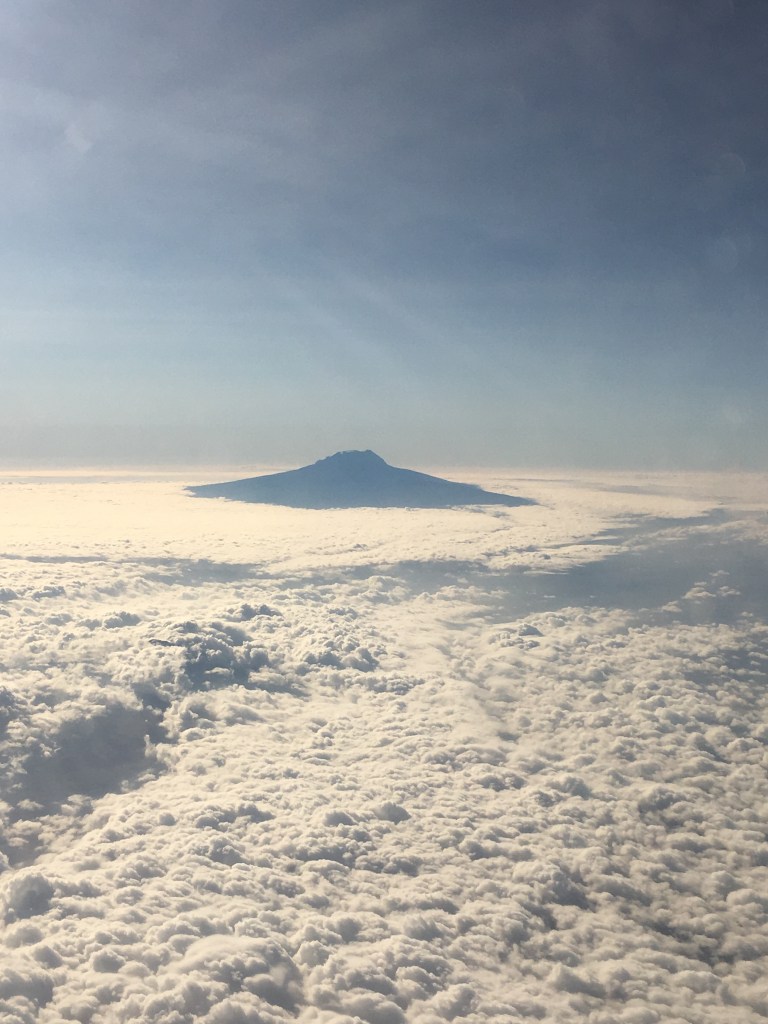
The flight in was a quick 1 hour hop from Nairobi and gave us our first glimpse of what we were attempting to conquer (photo below). The customs process was very smooth and I attribute that to having visas PRIOR to entering the country. The line for visas upon arrival was very long and looked very unpleasant. The baggage pickup was routine, thank god, because I had heard horror stories about lost luggage when traveling through Nairobi. Not lost luggage like they didn’t make the plane – lost luggage like some airport workers got a whole new wardrobe.
From Kilimanjaro Airport we were taken by car to our accommodations for 2 nights before the climb. On the ride to the lodge we got to see first hand what the area was like. There is no way to glamorize it, its poor. It’s extremely poor. With the exception of the main drag of highway (and I use that term loosely) all of the roads are dirt. The roadside stands, shanty towns and villages are all dirt. Many of buildings were either empty, abandoned, or unfinished. Some areas for one reason or another seemed to have congregations of several dozen people walking around doing various tasks. One of those tasks, which was new to me, was simply burning your garbage right out near the street. Small piles of smoldering leaves and trash sporadically lined the road as we drove on through the populated areas. It was one of those moments, one of what would be many in Africa, that you have as a traveler where you immediately appreciate something you take for granted back home, like organized garbage pickup. Below is a clip we took driving on the main road from the airport.
Another thing you see a lot of are these motorcycle/dirt bike hybrids. The small engines, cheap operating cost, and ability to drive on rough terrain makes them a very popular option for those who can afford it. From what I was told, these motorcycles act as everything from cargo transport, to taxi, to lifeline between villages. The essential and most important lifeline being water. It is no secret that clean water is a serious problem in developing African countries. Many times a single source of water is only accessible in a specific area and people travel miles upon miles carrying jugs to fill up and carry back home.
Outside of the populated roadside areas that popped up out of nowhere, almost everything else as far as the eye could see was mostly dry grazing lands. There is a constant dusty haze that lingers in the air. Much of the time looking in any direction you could identify a convoy of cattle and/or goats being ushered on by locals because of the large plume of dust that followed.
The nucleus of the entire region, both literally and certainly figuratively from an economical sense are 2 mountains that tower skyward from the generally flat landscape – Mt. Kilimanjaro and Mt. Meru. Kilimanjaro being the much larger and more popular of the sister mountains. I mean historically, Kilimanjaro always dated the best looking guys, was the prom queen, and excelled at everything. Meru is not nearly as popular, nor attractive, didn’t go to prom, and now owns like 20 cats. I don’t know where I am going with this… but some how you get the point.
Kilimanjaro is wildly beautiful and equally impressive. Contrary to my ridiculous narrative earlier, the locals will say they she (Kilimanjaro) is very shy, often hiding behind high clouds. When the weather does open up and you catch a glimpse of the massive peak, it is hypnotic. You kind of just stand there zoned out. Seeing it for the first time is something I will not forget.
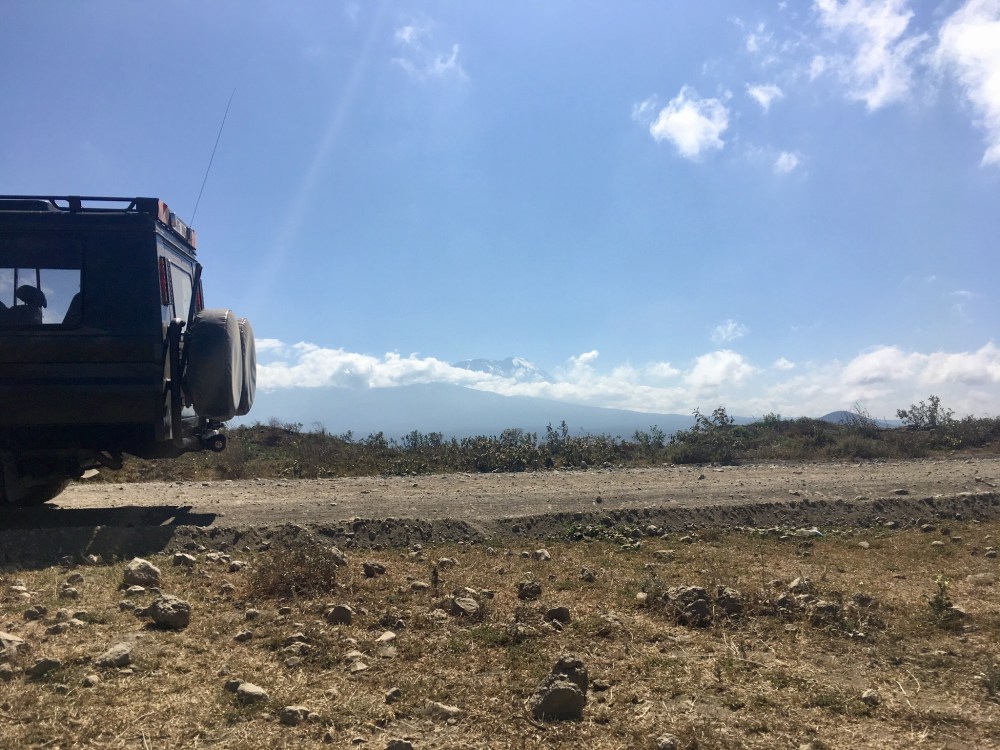
Kilimanjaro from the road 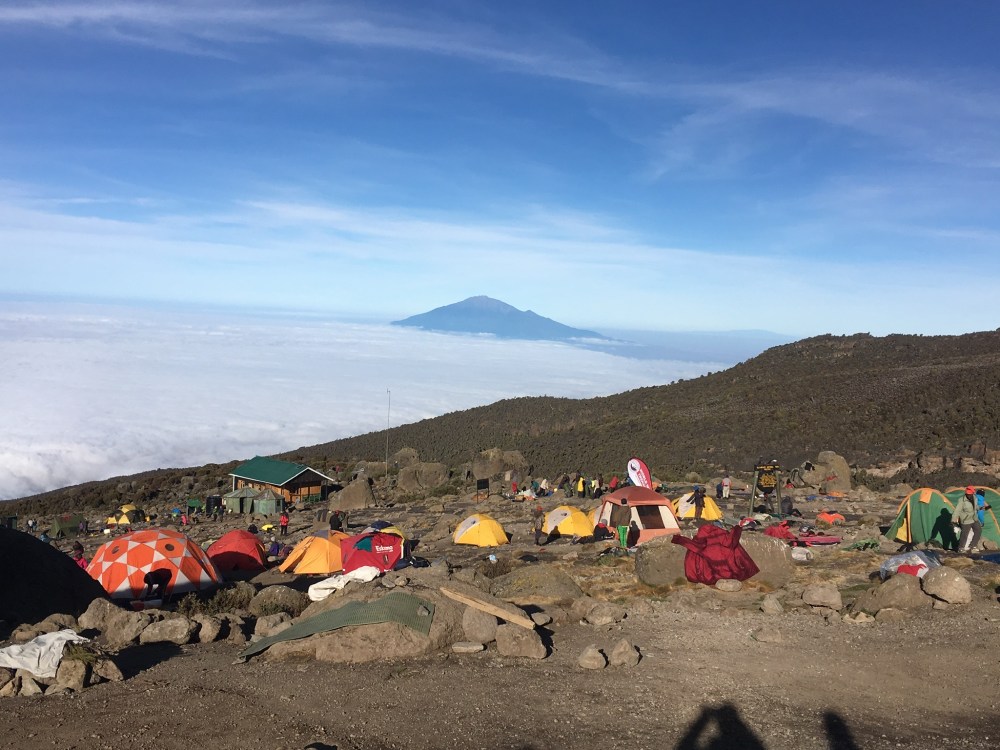
Mt. Meru from Kilimanjaro
The People
The people are what truly made our time in Tanzania special. From the minute the plane touched down to the minute our plane took off, we were welcomed everywhere. Everyone we encountered made us feel like they were genuinely excited we were there. I never personally felt, even for a single second, that I had to watch my back or be on alert for a scam or pickpocket. Even making stops on rural dirt roads where there were absolutely no tourists for miles, felt safe and even welcoming.
The absolute greatest part about the people in Tanzania were the children. When the young children, no matter where you were, spotted you (the white tourist) they would immediately smile ear to ear and start waving like a crazy person. Let me tell you, when you waved back they lost their minds with excitement.
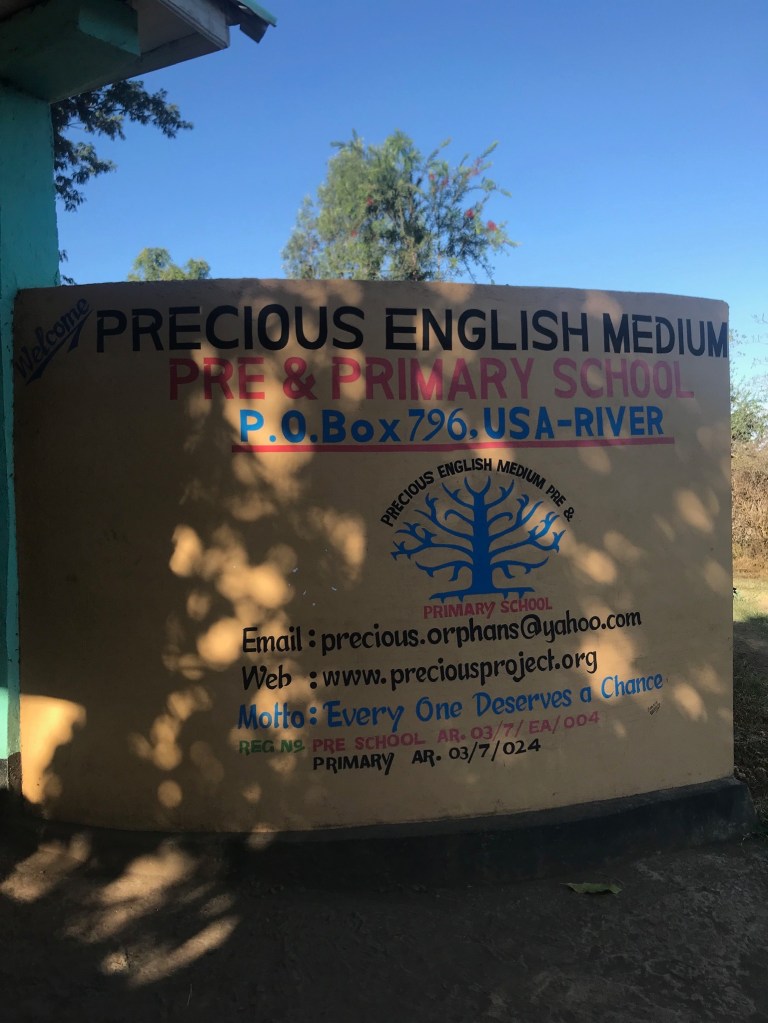
Before our climb we were fortunate enough to make a visit to a local orphanage near Usa River village. The orphanage called the Precious Project is a privately funded school and residence which was the full time home to 23 children. The staff was proud to show us around the small campus and introduce us to some of the kids. The kids were shy and it was explained that they very rarely get to meet a “Mzungu” – a term used for a white person. The kids hid until we turned our back and then curiously followed us. If we turned back toward them they laughed and hid again. It was a little game we didn’t even know we were playing. Later on I joked that it was like the ghosts in the Mario Brothers game that only moved when you weren’t looking. It was a lot of fun and added to the cultural learning experience.
The best way to describe the people we came across was proud. Everyone wanted to show you something, they wanted to make an impression. Some tried to sell you something they made or use you to practice their English. They wanted to show you where they lived, where they worked, their daily routine, how well they could take care of you. It was a different kind of hospitality I have never experienced anywhere else in the world. Even toward each other they helped and worked together. At one point, a car in front of us broke down and our driver pulled over. I asked him why he was stopping and he explained that here in Africa life is hard and you have to help when you can because you never know when you will be the one that needs help. Within in 5 minutes about 10 more cars pulled over to see if they could assist. It was like a weird phenomenon that makes perfect sense but seems completely foreign to us here in the United States.
My biggest takeaway was that everyone just seemed happy. We are talking a majority of a population that is literally dirt floor poor, but they were smiling. Never once, not in the bigger city or the smallest village way off the beaten path, did we see a person asking for money or a handout. Everyone was doing something, everyone was trying. It was another one of those moments that, as cliche as it sounds, puts things into perspective.
Where does it all go?
This is the part that makes me upset and even a bit angry. It costs an absolute fortune to get to Africa, never mind staying there and the various safaris and climbs. We spent most of our time in tents, but the hotels we did stay in were extravagant. Pools, gorgeous rooms, fine dining, and a staff that was there for anything and everything you could want. Whether it was on the mountain or on safari, we were catered to like royalty. Curiosity got the best of me and started asking what was a good salary for some of these porters, guides, and hotel staff. The answers were shocking.
A bilingual hotel staff member can expect to make roughly $7 per day before any tips. A porter on the mountain can make about $8 per day before tips. Safari guide and driver, around $25 per day before tip. A VIP climb up Kilimanjaro will run you exactly $5,000 per person – before tipping. A night in a higher end hotel including full board was about $450. Keep in mind for that price you are getting majority farm fresh homegrown food. There isn’t an intricate supply chain or a Restaurant Depot to bring marked up supplies on the regular.
The frustration for me was trying to understand who was making all the money and why it was not trickling down to the people or even local infrastructure. A couple hundred yards from a 5 star hotel was a village that had no running water, dirt floors, and no front doors.
I sort of figured it out when we met with the owner of Wayo Africa, an adventure tour company, who pompously bragged to me that these “young people” were willing to pay $1,000 a night to sleep in a tent with no power, no wifi, and no running water. He continued on excited to tell me how the less you give these tourists, the more authentic it feels to them and subsequently the more they would be willing to pay. He was certainly a grade A douchebag, but I was more upset with myself, quickly realizing I was the real sucker in the room.
Please make sure to select good, solid, and reputable travel companies and even hotels. People and organizations that make an effort to better their local economy. A great example was one of the places we stayed – Ngare Sero Mountain Lodge. A family run lodge who provides running water, jobs, funding, and a host of other services to the local village. They balance sustainability, responsible tourism, and a luxury experience with absolute perfection.
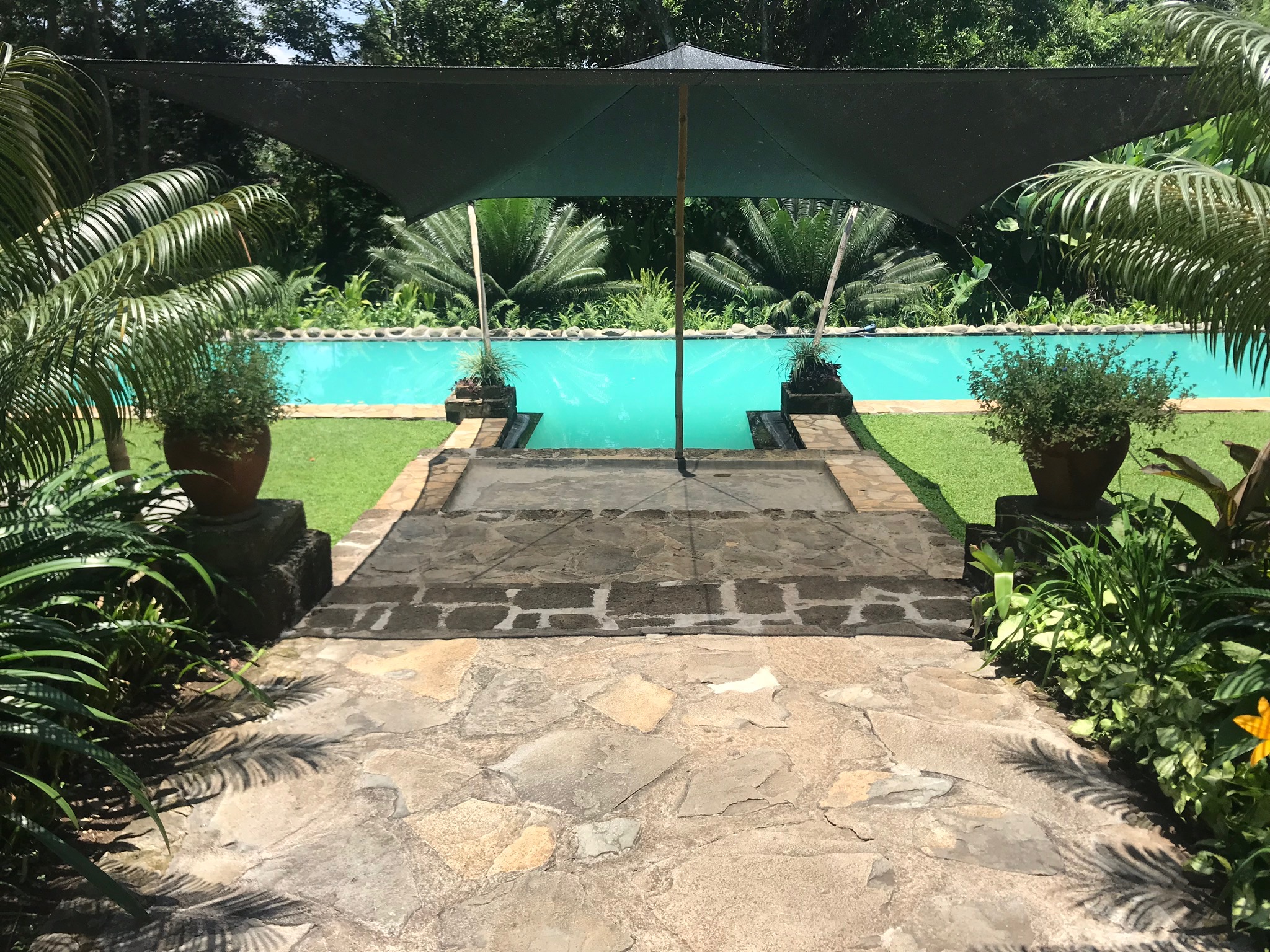
Pool at Ngare Sero 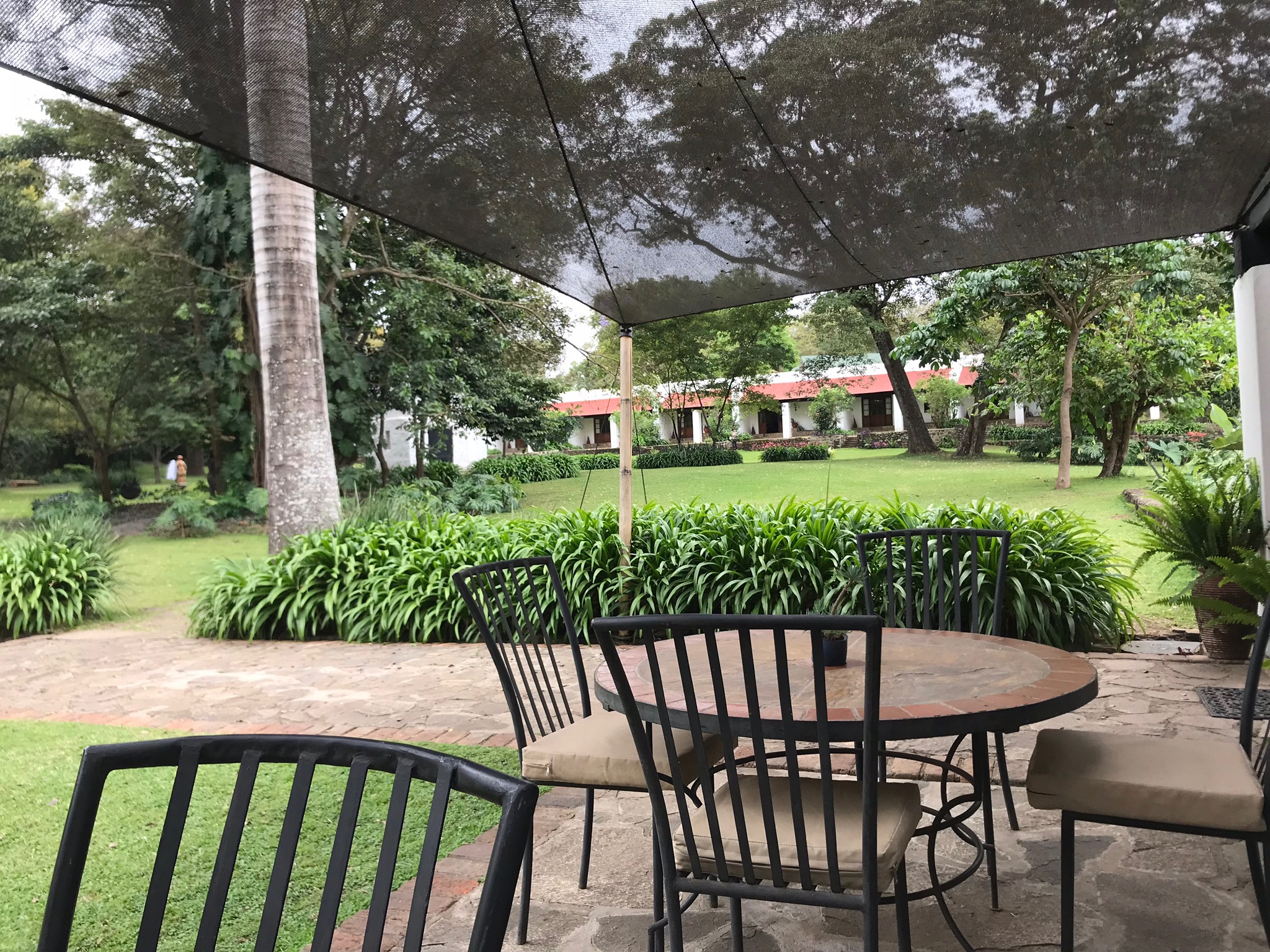
Grounds of Ngare Sero
OK I’m done
If you have made it this far I owe you a thumbs up, high five, and a thank you. There is just so much to write about and this piece just scratches the surface of a truly memorable travel experience. I will certainly follow up on this with a detailed piece about our climb up Kilimanjaro and some of the safaris we did.
 Plane Addicted